FAQ
Frequently asked questions and their answers:
|
|
What is the Irrlicht Engine? |
| The Irrlicht Engine is a high performance
open source and cross platform 3D engine for creating realtime 3D
applications. Its main targets are to be easy to use, extremely
fast, extensible and crash safe.
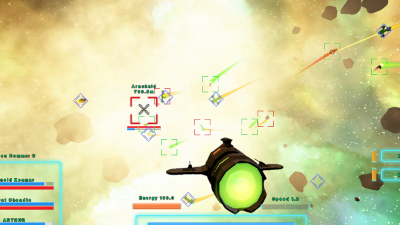
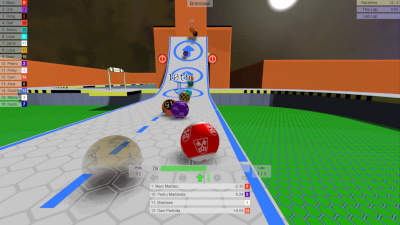
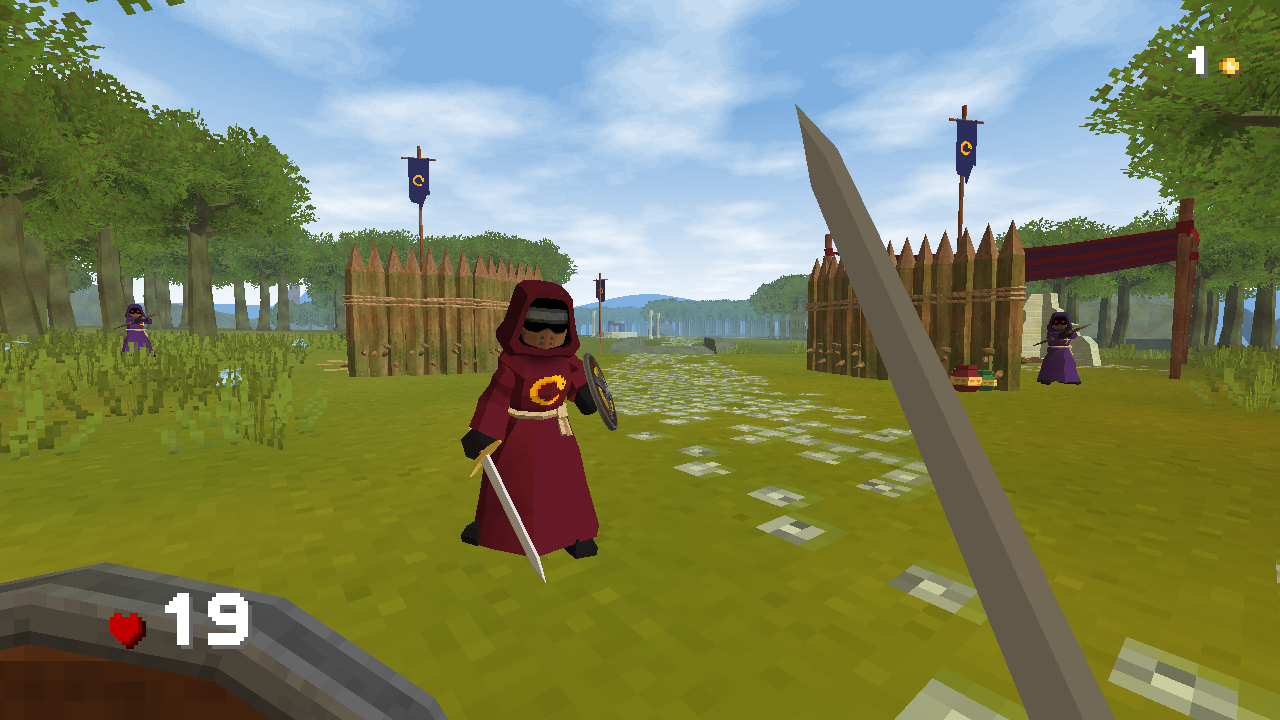
The engine is a quite flexible graphics engine, and it is possible
to write lots of different applications with it. Some are: complex
3D simulation applications, first and third person shooter games
with indoor and/or outdoor scenes, real time strategy games, 2D
games, ...
For more informations, look at the features
page. |
|
Can I use the engine in a non open source commercial product? |
Yes you can. The engine is open source
and totally free. You can debug it, fix bugs
and even change things you do not like. And you do not have to
publish your changes: The engine is licensed under the zlib
license, not the GPL or the LGPL. Look at license
for more informations. |
|
Can I create my game using Irrlicht as game engine? |
Of course you can, it's easy.
But please note: Irrlicht is not a game engine, it only does graphics.
For a game, you need a bit more, like sound output and maybe networking
and physics, and tools such as a game level editor. You are free
to choose any other library to do this. But to make it easier,
there are libraries and tools made by us which are independent
of Irrlicht, but easily integrate with Irrlicht engine projects.
For example, there is irrKlang,
a free 3D and 2D sound engine, or irrEdit,
a free 3D world and level editor. See the toolset
page, the wiki or the forum for more informations and help
about this. |
|
How can I make contributions to the engine? |
If you've wrote your own SceneNodes, image
or mesh loaders or further extensions to the engine, just send
them per mail to me or post them into the forum.
I will have a look at them and consider to put them on the homepage
or even into the SDK of the engine.
There is a tutorial available on the tutorial
page, which shows how to extend the Irrlicht engine. If you
want your addition to be merged with the development branch, please
also try to adhere to the Irrlicht coding rules. |
|
There are lots of other 3D Engines available. So what are the advantages
of the Irrlicht engine? |
The Irrlicht engine was created because
no available 3D engine satisfied my needs. I wanted an engine
which had some awesome features, and no engine wich was available
featured these things:
- Easy to use. All standard things and all cool special effects
of the Irrlicht Engine are able to be used without the need
to study its documentation for days. For example: To start up
the engine, load and show a complete quake 3 level needs only
about 6 calls to the engine and about 10 lines of code. Just
take a look at the tutorials and examples included in the sdk.
- Flexibility: The programmer is able to change and influence
almost everything in the engine although it is that easy to
use.
- Extreme stability. Most libraries for realtime applications
crash when the user does something the library programmer did
not expect. This is different in the Irrlicht engine. It prints
out a warning to (debug-)log and continues, always trying to
keep on running.
- Fast as lightning. Because speed is always an issue with
3d engines.
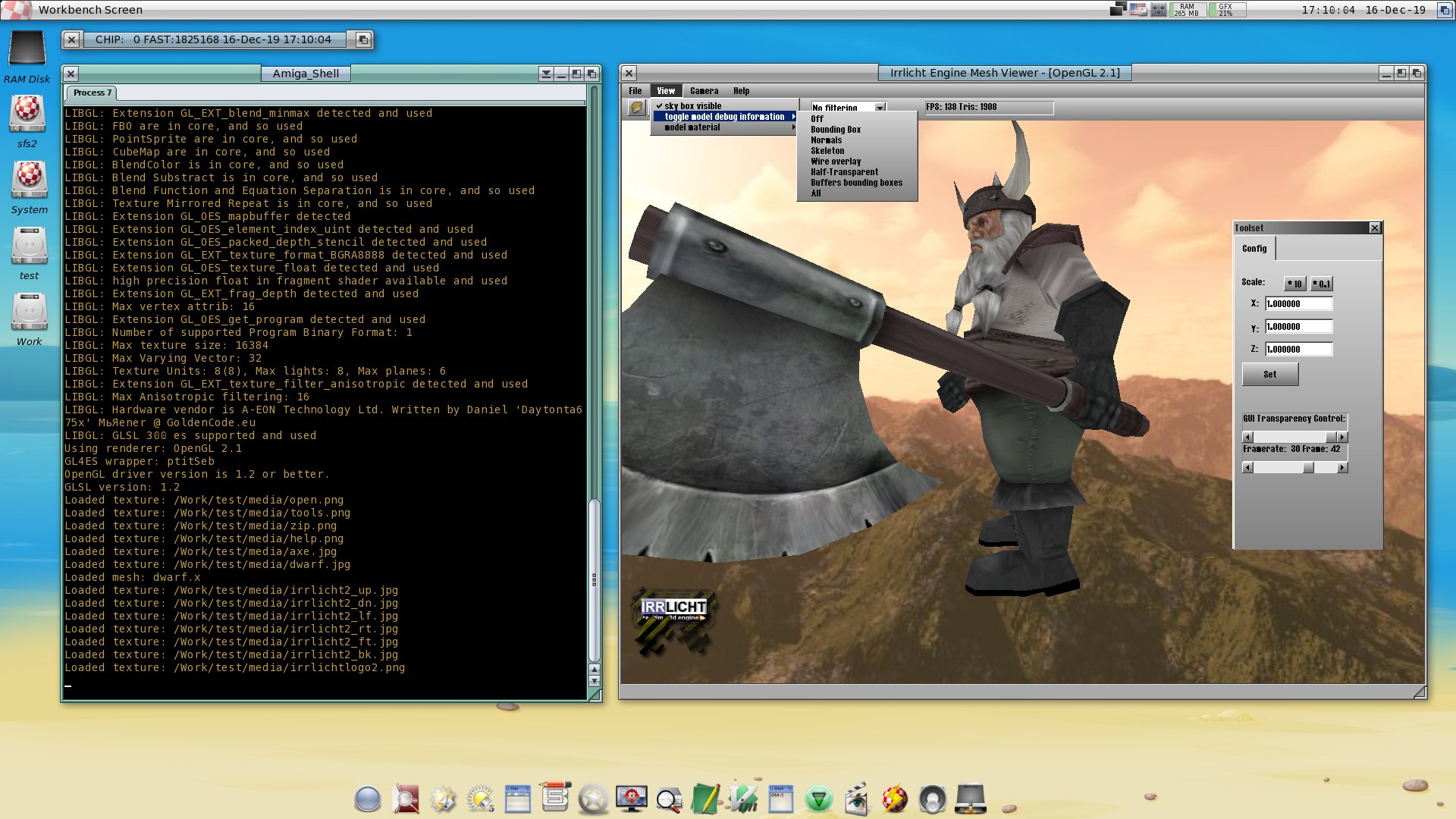
Lots of built-in importers. The engine is able to directly load
lots of common file formats because I did not want to use converters
or exporters, increasing development time. (.3ds, .md2, .obj,
.pk3, .ms3d, .bsp, .x, .bmp, .tga, .jpg, .psd, .pcx...)
- Platform independence. The engine is available on multiple
platforms.
- API independence. Because there are always some driver issues,
the Irrlicht engine supports more then one API. Currently there
is an OpenGL, Direct3D8 & Direct3D9 device, a null device
and two software rasterizers. The devices are able to be switched
during runtime.
- No dependencies from other libraries. The engine needs no
other libraries and sdks to be installed. Not for programming
with the engine and not for using the engine as end user. E.g.
The engine will also start up if no DirectX is installed on
the end user system.
- Detailed Documentation. With lots of examples and tutorials.
All the standard stuff. It provides you built-in tools and utilities
you will often need in 3D applications. Things you do not always
want to code again when doing a new application. (GUI System,
Font System + Tools, fast 3D Math, Containers, ...)
- Open source. The engine is fully open source and totally
free. You can debug it, fix bugs and even change things you
do not like. And you do not have to publish your changes: The
engine is licensed under the zlib
licence, not the GPL or the LGPL.
You can take a look at the features page of the Irrlicht engine,
for a more detailed description of most features. |
|
Why is the engine so fast? |
Lots of people are writing mails to me,
telling me that they've evaluated some 3d engines now and are
wondering why the Irrlicht Engine is that fast, faster than the
other ones. To be honest, I don't know the exact reason. But there
are some possibilities:
- The Irrlicht Engine does not use that conservative culling
algorithms like most other engines do, which works better on
todays 3d hardware.
It uses 16 bit textures by default (but all other formats are
possbile too) which enables the engine to transfer and/or display
textures 2 times faster than other engines.
- The engine does not relay on lots of other slow libraries,
almost everything is implemented directly inside the core of
the engine.
|
|
How many polygons is the engine able to draw? |
There is no limit. Okay, almost none:
The only limit is your hardware. So push out as much polygons
as you need, as long as your game is not getting slower.
Some people keep asking me why there are only 10000 polys in the
techdemo as maximum. This is only because I did not want to include
a huge quake 3 level, making the SDK download size bigger. If
you want to see the engine render more polys, just replace the
demo level with another one, and see for yourself. |
|
I've a problem with my code, could solve it for me please? I get
no answer in the forum. |
Sorry, but I don't have the time to debug
your application. Lots of people are sending me their code because
they are not capable of using a debugger, and I am not able to
check every program which is sent to me. In most cases it's a
problem in your C++ code and has nothing to do with the engine.
Just start your debugger and find out where your application crashes.
Or if you don't know how to use a debugger, you could print out
a
text before every line, to find out at which line it crashes.
The most common reason, why you don't get any help in the forums
is because you did not specify your problem enough. Just pasting
100 lines of code into there and writing "it crashes somewhere
here, could you solve it for me" is not enough. Hey, you
are the programmer, and at least 60% of the programming time is
spent debugging the code. Well, this is how I do it, and the 60%
value may be higher or lower for other programmers, but I think
you get the clue. Just try to find out by yourself what you did
wrong. You'll learn more from this then if you let it be fixed
by others. |
|
What does 'Irrlicht' mean? |
Irrlicht is the german word for a fairy-tale
creature which glows and flies, and can be found mostly in the
vicinity of swamps. I think the correct english translation is
"will-o'-the-wisp". Also, the word "Irrlicht"
is the composition of the two german words "irr", meaning
"mad" and "Licht", meaning "light".
The Irrlicht Engine is being developed in Austria (country south
of Germany, not Australia) and so I think 'Irrlicht' is a cool
name, although non german speaking people may not know how to
pronounce it.
Because lots of people asked me how it is pronounced, I uploaded
a .wav file, in which
you can hear a girl saying 'Irrlicht Engine'. |
|
Can I join the Irrlicht Engine team? |
Basically: No, sorry. We would like to
keep the Irrlicht Engine team small to keep everything clearly
arranged.
However, there are exceptions. If you for example create a cool/useful/huge
addition to Irrlicht and we think it would be easier to maintain
this part with you joining the team, and you would like to do
this too. Example: It would be cool if Irrlicht would run on the
Mac platform too. (It already does, just an example.) Several
people created partial working ports and sent them in as diff
file, but they were incomplete and at that time there was no version
control system for Irrlicht and it was not easily possible to
synchronize the code, and we didn't accept new team members then.
But that's changed now: If you created a working, Mac port according
to the Irrlicht coding rules, would like
to share and maintain it and also like to join the team, then
just send your code to niko. That's it.
Please note that we are getting really a lot of requests of people
who want to joint the Irrlicht Engine team (about 4 or 5 per month).
So it is really difficult to choose, because we would like to
keep the team small.
|
|
What are the coding rules? |
If you are creating a patch for Irrlicht
and want it to be merged with the development branch, please try
to follow these few rules:
- Don't add dependencies to other libraries or at least only
if really, really necessary.
- Don't use the STL, use the Irrlicht built in containers
instead.
- Don't use platform specific functions, use the internal
os:: namespace for that if there is no other way to do what
you need.
- Always keep in mind that Irrlicht must be compileable on lots
of different platforms and with several compilers.
- Don't use special compiler extensions and try to adhere
to standard C++.
- Use the Irrlicht types like f32 and u32 defined in irrTypes.h.
- Try not to break the existing interface if it is not really
necessary. Only change current behaviour of the engine if necessary.
People should be able to upgrade to new Irrlicht engine versions
as easily as possible. If you are doing this anyway, it would
be a good idea to discuss this with niko before.
- Try to adhere to the existing Irrlicht code style.
- Interfaces visible from outside start with I (e.g. ISceneManager),
implementations with C (CSceneManager), structures only
for holding data with S (SVertex3D).
- Methods start with a lower case letter, member variables
with uppercase letter. (e.g. ISceneManager::addTestSceneNode(),
ISceneManager::ListOfSceneNodes ).
- Public methods of interfaces have default parameters where
useful.
- Add doxygen documentation to new or changed methods. If
you did a bigger change to Irrlicht, it would also be nice
to document this in the file changes.txt
- Use the C++ line breaking style, not the one used by Java
coders:
| Good |
Bad |
for(foo)
{
// bar
} |
for(foo) {
// bar
} |
- There are some other few rules, but the ones above are
the most important ones, for example it is a good idea to
use spaces, newlines and tabs as often as possible. Just
try to make your code look like the existing one.
- Always check for errors, prevent crashes and wrong behaviour
by validating pointers (check if they are not null) and input
parameters. Log an error message and keep on running instead
of stopping execution at all cost. There are of course exceptions
like performance critical code like triangle rasterization in
software mode.
That's it, have fun coding. |
|
Is there no CVS? |
Irrlicht is now hosted by a subversion
server. All data in the CVS server is pre 1.0 source. But
if you still want to, you can access it via :pserver:anonymous@cvs.sourceforge.net:/cvsroot/irrlicht
Modulename is 'Irrlicht'. For a detailed description, see this
sourceforge manual page.
|
|
How can I access the Subversion server? |
You can access the subversion server via
https://irrlicht.svn.sourceforge.net/svnroot/irrlicht/trunk, online
online
repository browsing works too. |
|
What will be in the next release of the engine? |
Take a look at the development
page or my
blog, I am updating it from time to time with development
news. You will find a short list of features, which you can expect
to appear in the next version of the engine. |
|
When will be the next release of the engine? |
When it is done. This is only a open source
project with one programmer, and I don't get any money for it,
so I don't even have real deadlines. Time has shown that I need
about 1-2 months for a minor release, meaning for example going
from version 0.4 to version 0.5. Usually I am announcing the coming
of a new release one or two weeks before it is done, and posting
some screenshots of new features on the news
page. So please don't send me emails asking when the new release
will be available: In most cases, I don't know myself. |
|